Introduction
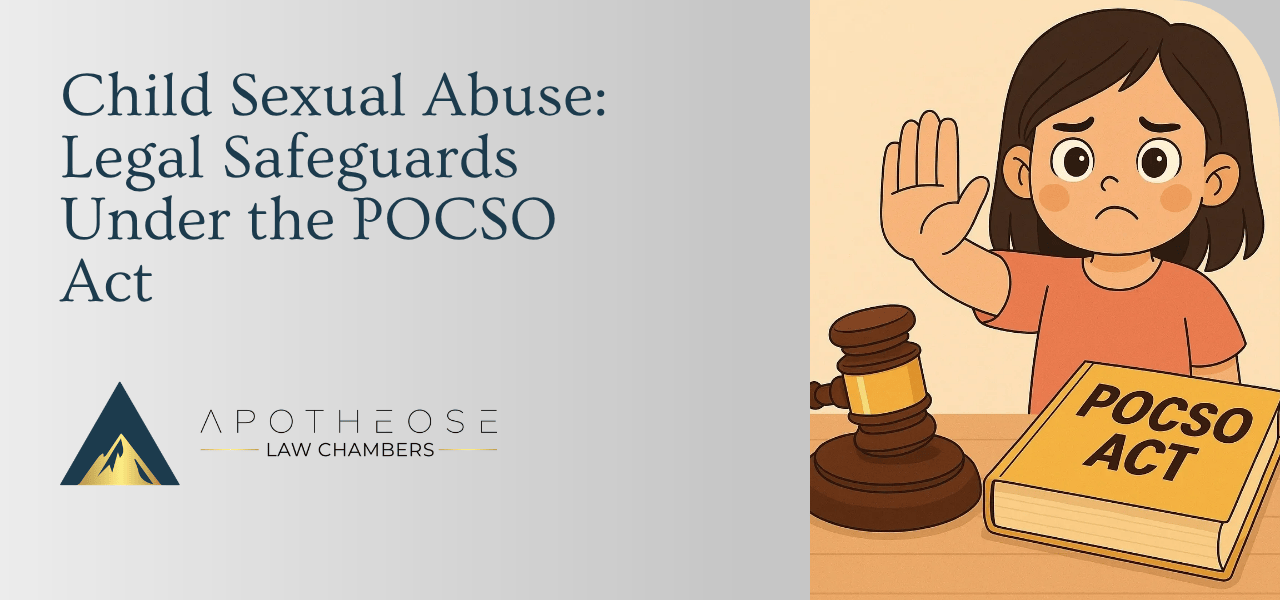
Child sexual abuse represents a severe breach of fundamental human rights and a widespread societal menace that knows no geographical, cultural, or societal boundaries. In the Indian context, this issue has historically been veiled by silence, social stigma, and collective denial, leaving many survivors without access to justice or necessary support systems. The introduction of the Protection of Children from Sexual Offences (POCSO) Act in 2012 represented a pivotal shift in India’s legislative approach to addressing this crisis. For legal scholars, analyzing the POCSO Act provides valuable insights into both the development of child protection legislation in India and the multifaceted challenges in its practical application.
This analysis explores the historical context, fundamental provisions, court interpretations, execution hurdles, and international perspectives of the POCSO Act, while evaluating its effectiveness and potential areas for improvement.
Background and Context of the POCSO Act
Prior to the POCSO Act’s implementation, child sexual abuse cases in India were prosecuted under various provisions of the Indian Penal Code (IPC), which proved insufficient on multiple fronts. The IPC’s framework failed to acknowledge various forms of sexual abuse, left male victims unprotected, and lacked child-sensitive procedures. Without specialized legislation, numerous victims, particularly male children and those who experienced non-penetrative abuse, were denied adequate legal protection.
The requirement for an all-encompassing, gender-inclusive, and child-focused legislation prompted the Ministry of Women and Child Development to draft the POCSO Bill. Enacted on November 14, 2012, the Act aimed to bridge existing legal gaps and establish comprehensive protections for children against sexual crimes.
Core Objectives of the POCSO Act
The POCSO Act was established with the fundamental goal of protecting children from various sexual offences, encompassing sexual assault, harassment, and pornography. Its key aims include:
- Establishing child-friendly legal procedures throughout the justice process.
- Facilitating swift investigation and prosecution through dedicated Special Courts.
- Enforcing mandatory reporting of offences while protecting victims’ confidentiality.
- Implementing severe penalties to discourage potential offenders.
The legislation defines children as individuals under 18 years of age, ensuring gender-neutral protection for all minors.
Essential Components of the POCSO Act
1. Detailed Classification of Offences
The Act provides a comprehensive categorization of offences including penetrative sexual assault, sexual assault, sexual harassment, and exploitation of children for pornographic content. Significantly, it acknowledges various forms of abuse, including non-penetrative sexual offences, which were previously overlooked.
2. Compulsory Reporting
The Act mandates that anyone with knowledge or suspicion of a sexual offence against a child must report it to authorities. Non-reporting is considered a punishable offense, underlining the Act’s strict stance.
3. No Time Limit for Reporting
Understanding the complex psychological impact and delayed disclosure patterns common in child sexual abuse cases, the Act enables victims to report incidents without any temporal restrictions, acknowledging that survivors may come forward even years after the abuse occurred.
4. Confidentiality and Privacy
The Act implements stringent measures to safeguard the victim’s identity, prohibiting any form of media disclosure. This provision is crucial in protecting the child from additional psychological trauma and preventing social stigmatization.
5. Child-Friendly Procedures
The Act emphasizes creating a supportive environment throughout the legal process. This includes recording statements in comfortable settings, permitting the presence of trusted support persons, and implementing measures to prevent any direct contact between the child and the accused during court proceedings.
6. Special Courts and Speedy Trials
To ensure efficient case management, dedicated Special Courts have been established in each district. The Act stipulates specific timeframes: evidence must be recorded within 30 days, and trials should conclude within a one-year period.
7. Stringent Punishments
The Act enforces severe penalties for offenders, including life imprisonment, and following the 2019 amendment, introduces capital punishment for cases involving aggravated penetrative sexual assault.
Procedural Safeguards and Special Courts
The Act’s procedural framework is meticulously designed to minimize victim trauma while ensuring meaningful participation in judicial proceedings.
- Reporting and Investigation: Law enforcement must immediately register an FIR upon receiving information and ensure medical examination within 24 hours. Statement recording must occur in a safe, non-intimidating environment.
- Trial Process: Priority is given to swift evidence recording, with in-camera trials protecting the child from public exposure. Direct interaction between the accused and the child is prohibited.
- Burden of Proof: The Act introduces a significant legal innovation by reversing the burden of proof for certain offences, presuming the accused’s guilt unless proven otherwise.
- Special Courts: As of March 2024, 409 Special Courts operate across 30 States and Union Territories, each equipped with dedicated Special Public Prosecutors for POCSO cases.
Despite these comprehensive safeguards, implementation faces obstacles including insufficient infrastructure, personnel shortages, and procedural delays, impacting case resolution timelines.
Landmark Judicial Decisions
The judiciary’s interpretative role has been instrumental in shaping the Act’s practical application:
- Just Rights for Children’s Alliance v. S. Harish (2024): The Supreme Court established a significant precedent by ruling that the mere possession of child sexual exploitative material constitutes a criminal offense, reinforcing zero tolerance for such content.
- Attorney General for India v. Satish (2021): In a landmark judgment, the Supreme Court reversed a controversial High Court decision, establishing that physical “skin-to-skin” contact is not a prerequisite for sexual assault under POCSO, thereby strengthening the Act’s protective scope.
- Nipun Saxena v. Union of India (2019): The Court fortified privacy protections by strictly prohibiting any disclosure of victims’ identities through any medium or platform.
- Jarnail Singh v. State of Haryana (2013): The Court established comprehensive guidelines for age determination procedures, ensuring technical issues don’t prevent children from accessing legal protection.
These judicial pronouncements reflect the courts’ unwavering commitment to preserving POCSO’s core objectives while adapting its interpretation to meet evolving challenges.
Implementation Challenges
Despite its robust framework, several obstacles hinder POCSO’s effective implementation:
1. Underreporting and Social Stigma
Cases frequently remain unreported due to societal pressure, fear of retribution, and community shame. Families often avoid legal recourse, fearing social ostracism and prolonged legal battles.
2. Delays and Low Conviction Rates
Although the Act mandates swift trials, case backlogs, insufficient infrastructure, and complex procedural requirements lead to significant delays. Low conviction rates continue to undermine the law’s deterrent capacity.
3. Resource Constraints
The system faces acute shortages of specialized personnel, including police officers, prosecutors, and judges trained in child psychology and POCSO provisions. Many Special Courts lack essential child-friendly infrastructure.
4. Data and Monitoring Issues
Inadequate data collection systems, inconsistent district-level statistics, and monitoring challenges hamper evidence-based policy development and implementation.
5. Impact on Adolescents
The Act’s approach to consensual adolescent relationships remains controversial, as it doesn’t differentiate between consensual and non-consensual acts among minors, potentially criminalizing teenage relationships.
Recent Amendments and Proposed Changes
The Act continues to evolve through legislative amendments and judicial guidance:
- 2019 Amendment: Enhanced penalties including capital punishment for aggravated penetrative sexual assault, broadened child pornography definitions, and strengthened gender-neutral provisions.
- Terminology Update: The judiciary recommended replacing “child pornography” with “child sexual exploitative material” to accurately reflect the offense’s severity.
- Digital Monitoring: Initiatives like the Baal Swaraj-POCSO tracking portal have been proposed to enhance case monitoring efficiency.
- Public Awareness: The Supreme Court has mandated nationwide awareness campaigns about child sexual abuse and available legal protections.
Comparative Perspective: POCSO and International Frameworks
A comparative analysis with global legal frameworks highlights POCSO’s distinctive child-centered approach:
- Bangladesh and Pakistan: While these neighboring nations maintain legal provisions against child sexual abuse, they fall short of POCSO’s exhaustive framework, particularly regarding specialized courts and child-sensitive procedures.
- United States and United Kingdom: These Western jurisdictions excel in mandatory reporting mechanisms and established child protection networks, yet their judicial processes lack the child-specific focus characteristic of POCSO.
- Australia and Canada: Their holistic child protection frameworks, while comprehensive, sometimes compromise on child-specific considerations, unlike POCSO’s dedicated focus on young victims.
Nevertheless, POCSO shares common implementation hurdles with international systems, including enforcement difficulties, cultural barriers, and limited resources.
Scholarly Critiques and the Way Forward
Legal experts acknowledge POCSO’s thoroughness and strict penalties while identifying crucial reform areas:
- Need for Nuanced Approach: Scholars advocate for reconsidering the Act’s inflexible stance on adolescent relationships, suggesting distinctions between consensual interactions and exploitative conduct.
- Implementation and Awareness: Enhanced investment in capacity building, infrastructure development, and public education campaigns is crucial for bridging implementation gaps.
- Victim Support and Rehabilitation: Experts emphasize strengthening victim support mechanisms, encompassing psychological assistance, healthcare services, and community reintegration programs.
Conclusion
The POCSO Act stands as a watershed moment in India’s juridical framework, delivering comprehensive safeguards against child sexual offenses. Its key strengths emerge from gender-neutral provisions, child-sensitive procedures, and deterrent penalties. However, from a legal perspective, the Act’s effectiveness ultimately depends on its practical implementation. Key priorities include addressing underreporting trends, reducing judicial delays, and refining the approach to adolescent sexuality.
While the path to eliminating child sexual abuse remains challenging, POCSO provides a robust legal foundation. Ongoing assessment, legislative refinement, and community participation remain vital to ensuring every Indian child’s right to safety and dignity under the law’s protective umbrella.